

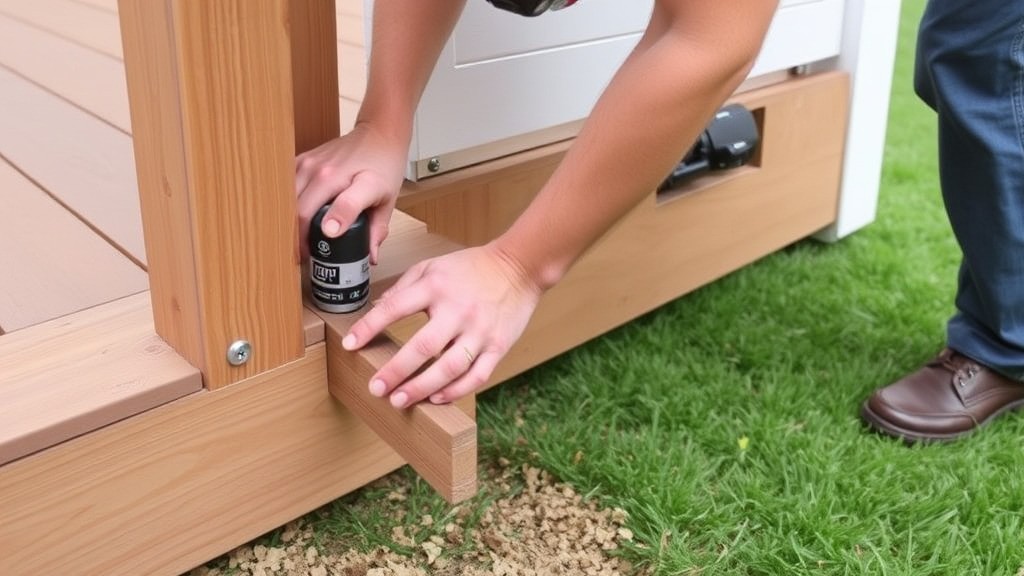
Installing Composite Decking with Hidden Fasteners
Having built decks before, I'm happy to provide my knowledge on how to install composite decking using concealed fasteners. This approach improves the lifespan and durability of your deck in addition to producing a neat, smooth appearance. From building the foundation to choosing the correct fasteners and finishing the installation, I will walk you through the key stages in this post.
The key elements of a good composite deck installation-including appropriate substructure preparation, selecting suitable concealed fasteners, and consistent board spacing-will be discussed. Following these professional advice and ideas can help you to design a gorgeous, professional-looking deck that will last for a lifetime. Now let's explore the realm of concealed fasteners and composite decking!
Selecting the Right Hidden Fasteners for Your Project
Choosing the best bolt method is crucial for a long-lasting and successful installation of composite outdoor decking using surprise bolts. Making this choice calls for considering many factors, as I have found.
Sorts Of Hidden Fasteners
Mostly two types of hidden fasteners are available: biscuit-style fasteners and clip-style bolts. While biscuit-style bolts provide a tighter fit but may be much more difficult to deal with, clip-style fasteners are usually less hard to put up and allow some board mobility.
Compatibility with Decking Material
Make sure the bolts you choose fit your account and information composite decking brand. Many manufacturers create fasteners specifically for their outdoor decking systems, usually offering the best fit and performance.
Sturdiness and Corrosion Resistance
Given the components will be used on your deck, I always advise using premium, corrosion-resistant fasteners. Excellent options to guarantee long life and fight corrosion are stainless steel or carefully laminated bolts.
Relieve of Installation
Think through the different Bolt System installation techniques. While some need for specialised tools, others may be installed with standard tools. Simple installation methods help me to save time and reduce the possibility of errors.
Growth and Contraction Allowance
Compound outdoor decking materials change and get with temperature variations. Select bolts that allow for this all-natural movement to prevent voids from accumulating over time or fastening from breaking free.
Cost Considerations
Although choosing for the most reasonably priced option seems enticing, I have found that buying high quality fasteners pays off over time. To select one of the most reasonably priced choices for your work, balance the initial cost against the lifetime and performance of the bolts.
Service Warranty and Manufacturer Support
Search for bolts with outstanding manufacturer help and a strong warranty. If you find any type of issues either during or after setup, this might be very helpful.
Careful consideration of these elements will enable you to choose the appropriate hidden bolts for your composite outdoor decking project, therefore ensuring a beautiful and long-lasting outcome that will surely endure for many years ahead.
Installing the First Row of Composite Decking Boards
In terms of arranging the initial row of composite outdoor decking boards, accuracy is quite essential. I usually begin by very precisely recording and measuring the location of the first board. This first row lays the groundwork for the whole deck, hence it's crucial to get it exactly.
First, I laid the starting strip down the side of the deck frame so that it is exactly straight and matched with your house or outside side of the deck. Every 12 to 16 inches, I screw this strip so it's level and flush with the joist tops.
I then lay the first composite board against the beginning strip. To allow expansion and contraction, leave a 1/4-inch space between the board and any kind of adjacent frameworks. I use spacers to maintain constant spacing all through the installation procedure.
I combine surprise fasteners with face screws to fastener the first board. The first board's exterior edge calls for face screws; its interior edge will be covered with hidden fasteners. The process is laid out right here:
| Step | Activity |
|---|---|
| 1 | Pre-drill holes for face screws along the external side |
| 2 | Countersink the openings to make sure a flush finish |
| 3 | Drive composite decking screws into the pre-drilled holes |
| 4 | Put hidden fasteners into the grooved side of the board |
| 5 | Safe surprise fasteners to the joists with provided screws |
Frequent board placement inspection is crucial throughout this process. I make sure the board remains straight across by using a string line or chalk line. Take your time to get it properly as any kind of inconsistency at this point might become more apparent when you insert even more rows.
I check all gaps and orientations as soon as the first board is securely in place before going on to the following row. This careful strategy to arrange the first row prepares the ground for a flawless and consistent hiding bolt arrangement of the remaining deck boards.
Tips for a Successful First Row Installation
Right here are some extra pointers I've found out for many years:
- Always review the manufacturer's instructions, as certain requirements may range brand names.
- Use a composite-friendly saw blade when cutting boards to size to stop fraying or cracking.
- If your deck has an image structure border, install this before laying the primary outdoor decking boards.
- Think about utilizing color-matched plugs to cover face screw holes for a much more refined appearance.
By complying with these actions and ideas, you'll have a strong structure for your composite deck, making certain an attractive and long-lasting outcome.
Finishing the Deck Installation with Hidden Fasteners
It's time to finish the remainder of your deck arrangement using hidden fasteners after you have successfully placed the first row of composite decking boards. To guarantee a flawless, professional-looking finish, this method demands accuracy and meticulousness.
Proceeding the Installation
To wage the installation, comply with these actions:
- Place a surprise bolt in the groove of each joist along the installed board.
- Safeguard each bolt with the supplied screws, guaranteeing they're limited yet not over-tightened.
- Slide the following board right into location, ensuring it involves fully with the fasteners.
- Make use of a rubber mallet to delicately touch the board, making sure a snug fit against the fasteners.
- Repeat this procedure for every succeeding row of outdoor decking.
Preserving Proper Spacing
It's important to keep regular spacing between boards for appropriate water drainage and expansion. Many concealed bolt systems are designed to provide the correct gap, however constantly confirm the producer's suggestions.
| Board Width | Suggested Gap |
|---|---|
| 4-inch boards | 1/8 inch |
| 6-inch boards | 3/16 inch |
Dealing with Butt Joints
When signing up with 2 boards end-to-end, bear in mind to:
- Use a dual joist to give ample support for both board finishes.
- Install separate concealed bolts for every board end at the butt joint.
- Keep a 1/8 inch space in between board finishes for expansion.
Finishing Touches
As you near the edge of your deck:
- Measure and cut the last board to fit, permitting overhang if wanted.
- If the final board needs to be torn lengthwise, you might need to face-fasten it utilizing color-matched screws.
- Mount fascia boards to cover the subjected frame, making use of color-matched screws for a clean look.
By following these actions and paying close focus to information, you'll accomplish a stunning, expertly installed composite deck with a clean, fastener-free surface. Bear in mind to always consult your certain item's setup guide for any special needs or suggestions.